

Profile
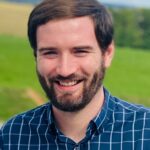
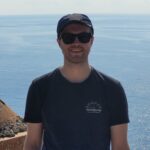
Jeremy Baldwin
-
About Me:
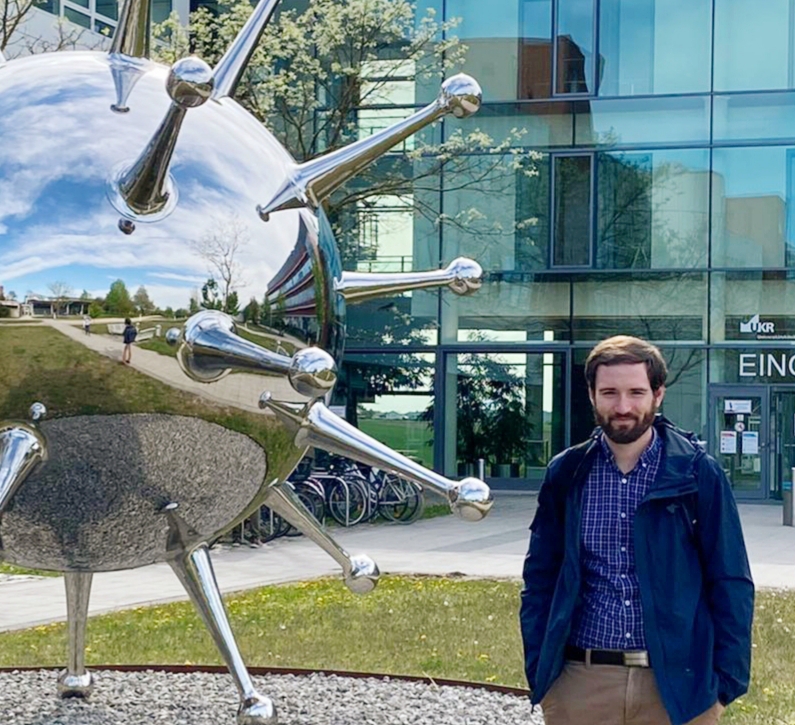
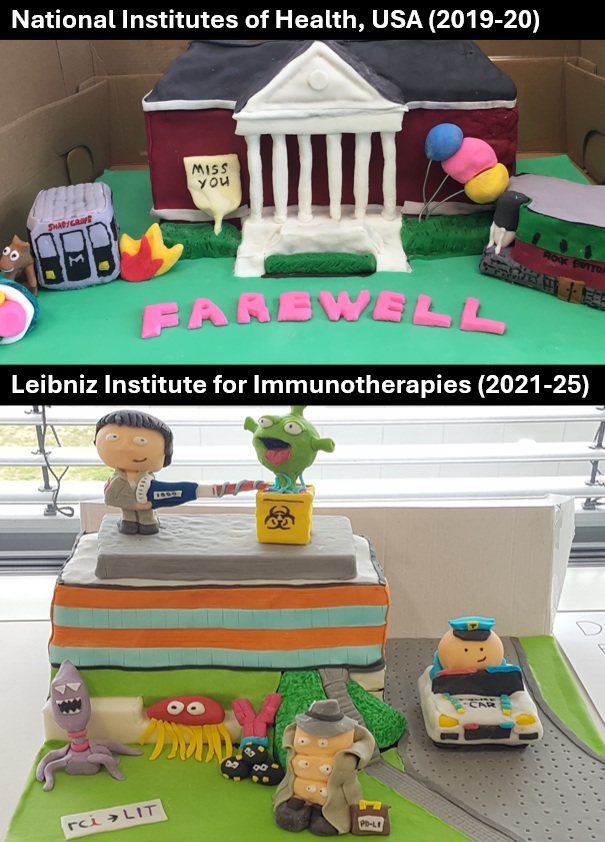
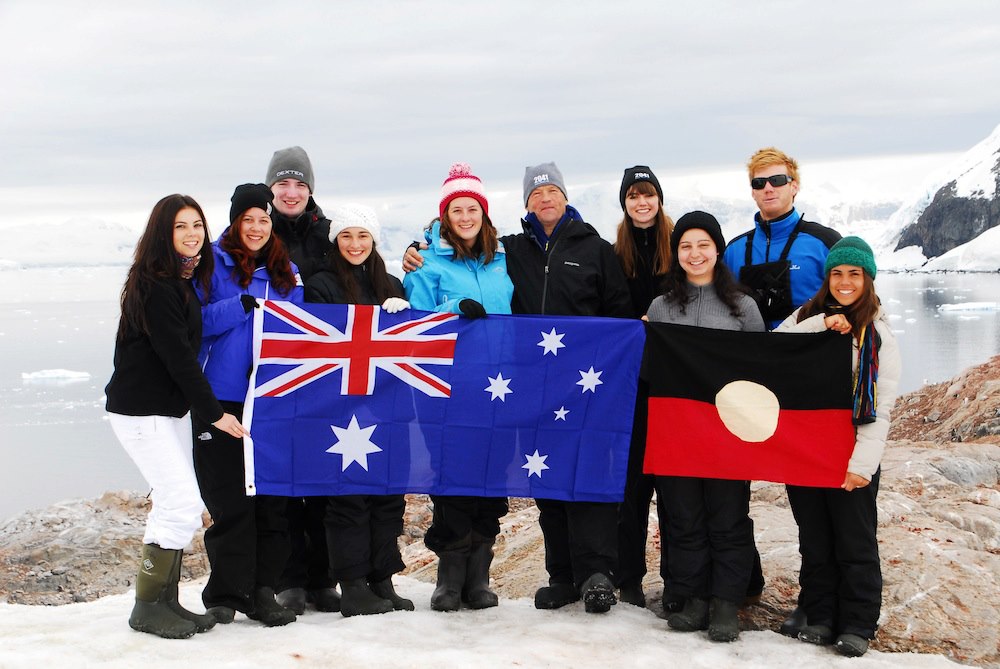
I’m a postdoctoral research at the University of Cambridge, but Science has provided me with a lot of amazing opportunities to work all over the world from Australia, United States, Ecuador, Germany, UK and even Antarctica. I love Football, Pizza/Pasta, Travelling/Backpacking and Baking [and twice made a cake of my research institute(s), see photo gallery].
-
Read more
I’m an Australian researcher. I think I have the best job in the world. We have the freedom to explore ideas and new concepts. Most conceptions about Science is that its boring, however it involves a lot creativity, similar to the Arts. You need to think out box, because this where new discoveries are made.
-
My pronouns are:
he/him
-
My Work:
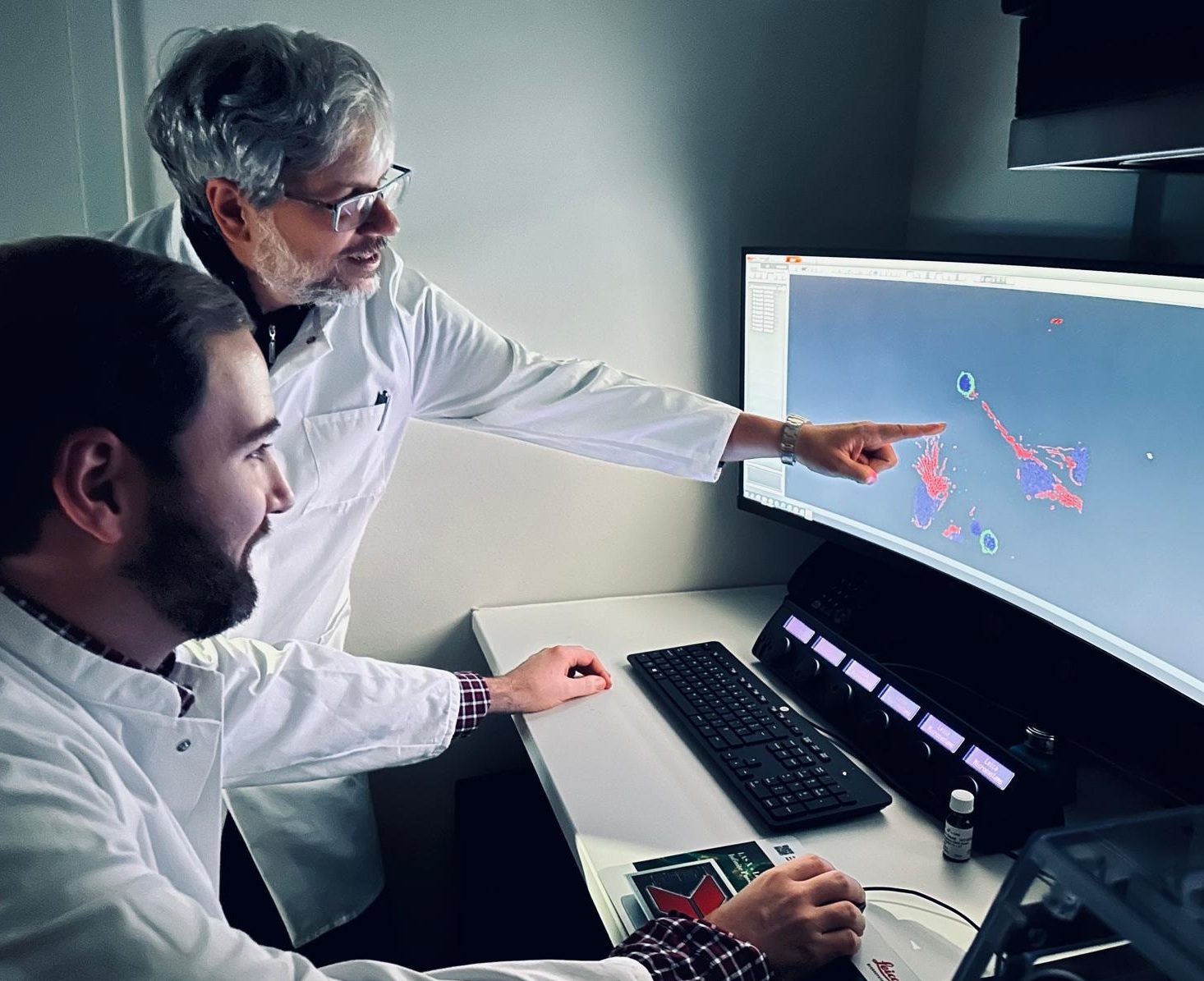
Immune cells, like all cells, contain little organelles which act like gears, sensors, motors and controllers of the cells. My work focuses mainly on repairing or supercharging mitochondria (‘the batteries of cells’) in immune cells to empower them to fight infection and cancer.
-
Read more
Immune cells are like “living drugs”. This makes them smart and able to adapt to changing environments, however also as living construct they can also become exhausted, limiting their ability to treat disease. I improve the cells by transplanting new organelles into the cells or synthesize synthetic organelles for them from scratch, so they last longer and can work more effectively. Our work involves a lot of different disciplines from cell biology, chemistry, information technology and engineering.
-
My Typical Day:
After coffee and a scenic walk through college grounds in the morning, I spend the day checking research updates from collaborators, reading new papers, mentoring students, enjoying lunch at the local food markets, running experiments in the lab before finishing at around 5 pm.
-
Read more
The most important reagent in Science is coffee, so this is the first protocol I follow in the morning. After I am fully awake, I then walk to work, which takes me through the university sporting grounds, Trinity/Kings college and the public gardens. Usually once I arrive in the office I go through my email inbox, science is very collaborative endeavour and we have joint projects running all over the world in different time zones. When we go to bed, scientist in other parts of the world start working in their labs, so Science never stops. So in the morning usually my inbox is full of research updates and discussion, which I go through. Also in the morning I plan out experiments and meet with students I supervise to check the progress on their projects and answer any questions they have. Then we have lunch usually in the local food markets. In the afternoon I run any experiments I need to do in the lab and analyse data. I go home at 5-6pm.
-
What I'd do with the prize money:
We want to use the prize money to help collaborate with one of the museums in Cambridge to showcase research and make our work more accessible to the general public.
-
Education:
I went to school 16,463.04 km away from my current location in Cambridge in a small high school called Padua College in Brisbane, Australia.
-
Qualifications:
In Australia we had OP rankings (which is equivalent to GSCEs) it basically abbreviation of ‘Overall Position’ with ranking between 1-25, with 1 being the highest and 25 the lowest. I received a OP8 which is about average and only around top quarter of students in the state, but was enough to get in my first university choice which was a dual Bachelor of Science and Bachelor of Business degree(s) which I studied in parallel for four years at the Queensland University of Technology. I then got a fellowship and did both a PhD and Master of Business at the Centre of Regenerative Medicine.
-
Work History:
In Germany once craftsman (such as carpenter, stone mason, metalworkers, painters) finishes their apprenticeship they travel for several years, this period of time is called Wanderjahre (German for “wandering years”), and they travel to work under different masters in different workshops. Only after the experience of working in different environments, could they then apply to call themselves true masters of their trade. Science is the same, when you do your PhD, you work only under one supervisor in one lab, so during post-doctoral years your encouraged to work in different research institutes to help you develop different skills/expertise and overall help you become a better scientist. So this is what I did, and in 2019 packed my bags and left Australia. I was fortunate enough to get Fulbright fellowships to work at the National Institute of Health (one of the leading government research agencies in the US, near Washington DC) and Sir Winston Churchill/Endeavour Research fellowships to work at the Technical University of Munich, Germany.
-
Current Job:
I am a Marie Skłodowska Curie European Postdoctoral Fellow at the University of Cambridge working on Cancer Immunology.
-
Employer:
University of Cambridge, Department of Pathology
-
My Interview
-
What did you want to be after you left school?
Scientist
Were you ever in trouble at school?
Yes. All the time. Often I got bored or distracted in class.
If you weren't doing this job, what would you choose instead?
Pilot
Who is your favourite singer or band?
Kasabian
What's your favourite food?
Pizza
If you had 3 wishes for yourself what would they be? - be honest!
Good health and well-being for the people I love, make positive impact with my research and gain superpowers to teleport to travel the world for free/avoid traffic on the way to work.
Tell us a joke.
Two blood cells met and fell in love. Alas, it was all in vein.
-